
Share this post:


Can a healthy gut help you feel more confident?

At first glance, confidence and gut health might seem completely unrelated. But emerging research suggests there may be a connection.
While your gut microbiome doesn’t directly determine how confident you feel, it can influence several factors that contribute to confidence, including mood, stress resilience, energy levels, and mental clarity. When these areas are functioning well, people often feel more positive, capable, and resilient in everyday life.1https://pmc.ncbi.nlm.nih.gov/articles/
The gut-brain connection
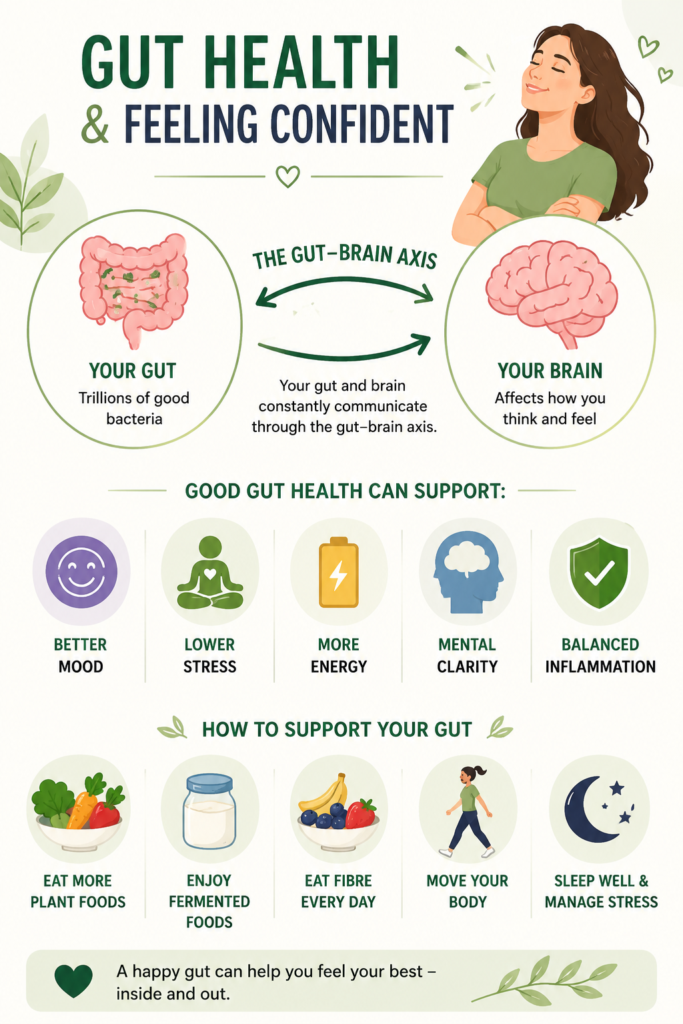
The gut and brain are constantly communicating through a complex network known as the gut-brain axis. This two-way communication system involves the nervous system, immune system, hormones and the vagus nerve.
When the gut microbiome is balanced and diverse, it helps support healthy communication between the gut and brain. However, disruptions to the microbiome may influence inflammation, stress responses and neurotransmitter production, all of which can affect how we feel emotionally.2https://www.nimhd.nih.gov/news-events/research-spotlight/
Mood & emotional wellbeing
One of the most studied aspects of the gut-brain axis is its influence on mood.
Certain gut bacteria are involved in the production and regulation of neurotransmitters such as serotonin, dopamine and GABA, which help regulate mood, motivation and emotional wellbeing. In fact, around 90–95% of the body’s serotonin is produced in the gut!3https://www.verywellhealth.com/gut-microbiome4https://pmc.ncbi.nlm.nih.gov/articles/
While poor gut health is not the sole cause of anxiety or low mood, research suggests that an imbalanced microbiome may contribute to symptoms in some individuals. Since confidence is often closely linked to emotional wellbeing, supporting gut health may indirectly help support confidence too.
Stress & resilience
Stress affects both the brain and the gut.
When we experience ongoing stress, the body releases hormones such as cortisol and adrenaline. Over time, chronic stress can alter gut motility, affect microbial diversity and increase gut permeability. At the same time, research suggests that the gut microbiome may help influence how the body responds to stress. A healthier, more diverse microbiome has been associated with improved stress resilience and emotional regulation.5https://pmc.ncbi.nlm.nih.gov/articles/PMC7213601/
Feeling calmer and better able to cope with challenges can naturally contribute to greater self-confidence over time.
Energy & motivation
Confidence is often harder to access when we’re exhausted.
The gut microbiome plays an important role in digestion, nutrient absorption and metabolic function. When digestive health is compromised, some people may experience fatigue, brain fog or reduced motivation.6https://www.verywellhealth.com/gut-microbiome
Supporting gut health may help improve overall wellbeing, making it easier to feel energised, engaged and capable in everyday life.
Mental clarity & cognitive function
The gut-brain axis also appears to influence cognitive processes such as memory, focus and mental clarity.
Research continues to explore how gut microbes may affect brain function through immune signalling, neurotransmitter activity and the production of beneficial compounds such as short-chain fatty acids.7https://www.frontiersin.org/journals/microbiomes/articles/
When we feel mentally sharp and focused, we’re often more likely to trust our decisions and feel confident navigating daily challenges.
Supporting your gut (& building confidence!)
While there is no single food or activity that will instantly boost confidence, supporting your gut health may help create the foundations for better mood, energy and resilience.
Simple habits include:
- Eating a wide variety of plant foods
- Increasing fibre intake – CG’s Complete Prebiotic contains 18 different types of fibre, making it quick and easy for you to feed your gut bugs the premium diet they require for ultimate gut health!
- Including fermented foods such as kefir, kimchi, and sauerkraut
- Managing stress where possible – try Ashwagandha! It’s known to reduce stress, anxiety, and depression.
- Prioritising quality sleep
- Staying physically active
- Spending time outdoors and connecting with others
Confidence is bigger than your microbiome
It’s important to remember that confidence is shaped by many factors, including experiences, relationships, environment, personality, overall health, and self-belief.
Your gut microbiome is not the whole story…
But it may be one piece of the puzzle. By supporting your gut, you’re also supporting many of the systems that influence how you think, feel and respond to the world around you.
And sometimes, feeling your best physically can help you show up more confidently, too.
Check out 7-gut-friendly ways to feel more-confident for more tips on how to feel your best.
Questions? Contact one of our Nutritional Therapists via live chat from 8 am to 8 pm on weekdays for bespoke advice on gut wellness.
References
- 1
- 2
- 3
- 4
- 5
- 6
- 7