Share this post:


Saving Rich Part 1

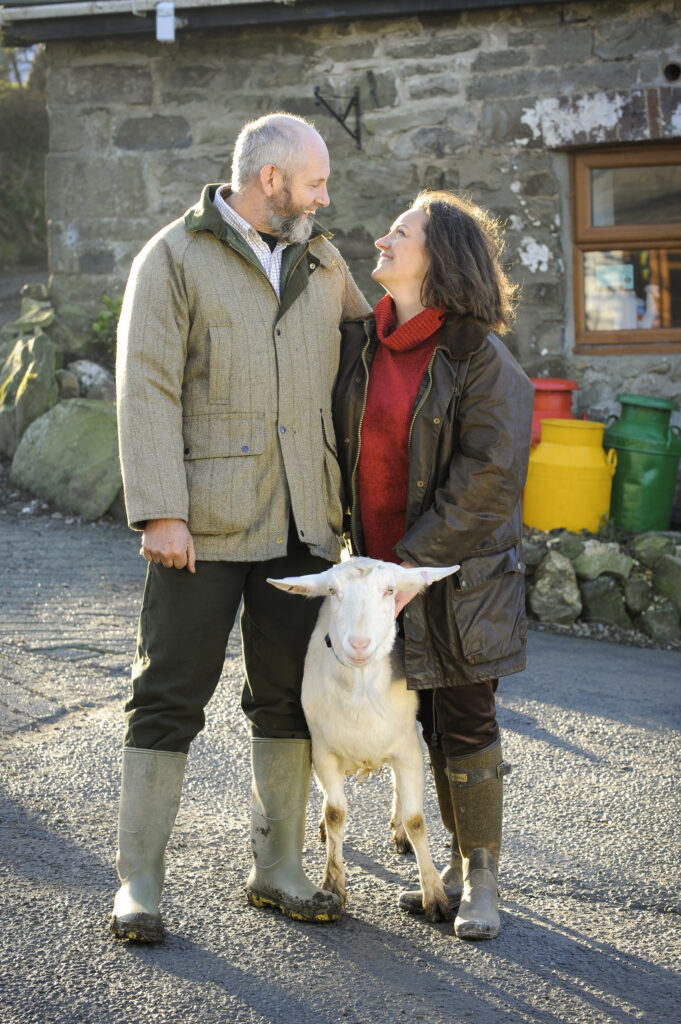
So when my husband tried to die on me – I mean, not ON me, he was on the sofa mostly — and doctors couldn’t help us, I was forced into doing a lot of reading.
(Field Note: before we get started here, I would like to state that I am not a crank about antibiotics. Just saying. If they had an antibiotic that would have worked on Rich, I would have fallen to my knees in gratitude and knocked over the nice man in the white coat to get the magic pill.)
The doctors didn’t have anything left to offer. That was the whole point. Rich came out of the hospital with MRSA, a virulent superbug infection in the surgical incision left after having his colon removed. MRSA stands for Methicillin-Resistant Staphylococcus aureus. It’s a type of Staphylococcus aureus bacteria that has developed resistance to many commonly used antibiotics, particularly methicillin and related drugs.
It looked like horrible wet little red mouths eating into the wound, that get deeper every day instead of healing. Tunnelling their way down toward his vital organs. I sincerely hope that you never see what it looks like. Because it is terrifying. And more terrifying still is the moment when the doctor looks at you and shrugs – because there’s nothing they can do for you.
We have become very reliant these days on the idea of antibiotics. And antibiotics are amazing and life-saving. UNTIL THEY AREN’T.
The World Health Organisation describes AMR (anti-microbial resistance) as a global health emergency. They reckon that 4.95 million deaths per year are associated with AMR, and 1.27 million deaths per year are directly attributable to it.
Rich was so nearly one of them.
But the bigger question here is — why? Why have antibiotics become resistant? Why are they getting more resistant every year?
Bad news here, possums – it’s all our fault.
It’s not just that people don’t finish their antibiotic courses—that’s a small part of a much larger picture.
Antimicrobial resistance develops because that’s how living systems work. It was always going to happen. Think about it – bacteria are constantly exposed to antibiotics across the whole system: in human medicine, in agriculture, and in the environment.
In any population, some organisms are going to be more tolerant than others. The weaker ones will always die off, while the stronger ones survive and multiply.
In bacterial populations, the survivors don’t just pass resistance down to their offspring – they can also pass them sideways to other bacteria, even across different species, through a process called “horizontal gene transfer.”
Over time, and under continuous pressure, this creates increasingly resistant populations.
We’re not just killing bacteria—we’re training them. We are teaching them – bit by bit – to resist us.
They are learning. Oh yes, they are learning. And they are breeding faster than we do – there’s a new generation of bacteria every 20 minutes.
These new stronger bacteria are circulated back into the hospitals via people, food, shoes, surfaces, the environment, the water system. You might well encounter them in a “Healthcare-Associated Infection”, also known as HCAI.
That’s what my husband had.
Bacteria are really, really good at this. And while the bacteria are merrily surviving, breeding and swapping genes, out-performing us, out-learning us and generally eating our lunch, what are we doing?
Not. That. Much.
Right now, there are around 40-50 antibiotics in clinical development worldwide. Only about 10-15 of those are considered truly “novel,” meaning that they work in fundamentally new ways, rather than just being modifications of existing drugs.
Why so slow? Because Big Pharma is exiting the field. They know a sucker’s game when they see one. Antibiotic development is scientifically challenging and financially unattractive. Not much money in it. There’s more money in things like diabetes, which require ongoing treatment.
Some smaller biotech companies are still in there pitching, but a lot of them go bankrupt.
Look – I get it – this is all theoretical. It was to me too, until it happened to my husband. There’s a weird moment when the doctor avoids your eyes, shimmies sideways out of the room and you realise abruptly that you have crossed the line from “them” – the slightly weird, slightly suspect group of “ill people” – into “us.” The ones who are going to have to eat this nightmare cookie.
When it’s YOUR loved one who is dying, and there’s no medicine left to give them, things get real in a hurry.
Ten years ago, that was Rich. Tomorrow, it could be you.
And we’re running out of bullets.
Because bullets were never the right model.
What I learned, during that dark and scaresome time, was this:
Killing your way forward works beautifully.
Until it doesn’t.
I had to think of something else – something different – something the doctors would never consider – and I had to think of it fast.
Turns out, there is another way.
But I didn’t stumble on it, until I was so very nearly out of time…
TO BE CONTINUED…
Hugs,
Shann.x
Shann Jones MBE, Founder/Director Chuckling Goat
The Most Influential Woman in Business to Watch in 2026, The Enterprise World