Share this post:


Is intermittent fasting actually good for your gut?

Intermittent fasting has evolved from a niche eating pattern to one of the world’s biggest health trends. Some people say it has transformed their energy levels, digestion and waistline, while others find it leaves them tired, hungry and counting down the minutes until their next meal.
So, who’s right?
When it comes to gut health, the answer isn’t as simple as saying fasting is either “good” or “bad”. Science suggests intermittent fasting may offer benefits for some people, but it isn’t suitable for everyone. More importantly, your gut microbiome appears to care far more about what you eat than simply when you eat.1https://pmc.ncbi.nlm.nih.gov/articles/
What is intermittent fasting?
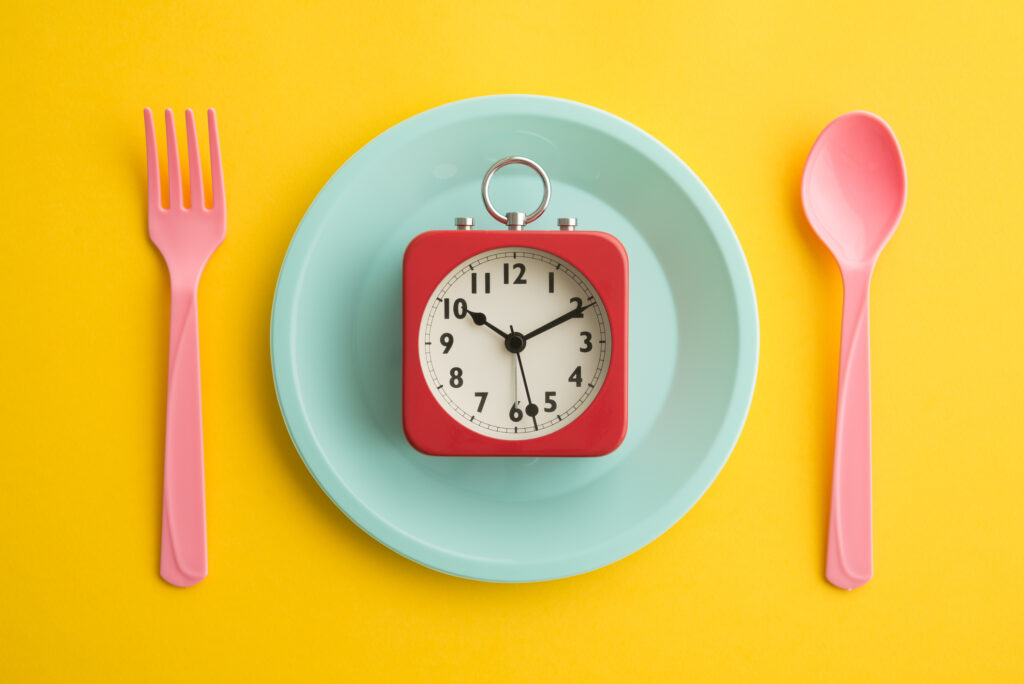
Intermittent fasting (IF) is an eating pattern that alternates between periods of eating and periods of fasting.2https://www.nejm.org/doi/full/ The most common approaches include:
- 16:8 – fasting for 16 hours and eating within an 8-hour window.
- 14:10 – a gentler version that’s often easier to maintain.
- 5:2 – eating normally for five days and restricting calorie intake on two days each week.
Unlike many traditional diets, intermittent fasting focuses on when you eat rather than what you eat.
Your gut likes a break too
One of the most interesting ways intermittent fasting may support digestion has little to do with weight loss.
Between meals, your digestive system activates the Migrating Motor Complex (MMC), often nicknamed your gut’s natural “housekeeper”.
Rather than digesting food, the MMC generates gentle waves that sweep leftover food particles, bacteria, and digestive debris through the small intestine. This natural cleaning process may help reduce bacterial overgrowth in the small intestine and support healthy digestive function.3https://www.nature.com/articles/
Constant grazing or snacking throughout the day may reduce the amount of uninterrupted time this housekeeping system has to do its job.
How intermittent fasting affects your microbiome
Research into intermittent fasting and the gut microbiome is still developing, but early findings suggest time-restricted eating may:4https://academic.oup.com/nutritionreviews/article/5https://linkinghub.elsevier.com/retrieve/
- Support a healthier gut microbiome
- Increase the production of beneficial microbial compounds called SCFAs
- Help support healthy blood sugar regulation and metabolism
- Reduce markers of inflammation in some individuals
- Better align eating patterns with the body’s natural circadian rhythm
Much of the strongest evidence currently comes from animal studies, while long-term human studies remain limited. Scientists agree that further research is needed before firm conclusions can be made.6https://pmc.ncbi.nlm.nih.gov/articles/
Your microbiome cares more about diversity than dinner time
Here’s where things get interesting.
You could fast for 16 hours every day, but if your meals consist largely of ultra-processed foods with very little fibre, your gut bacteria are unlikely to thrive.
On the other hand, someone who eats a wide variety of colourful, fibre-rich whole foods throughout the day is providing their microbiome with exactly what it needs.
Research consistently shows that people who consume 30 or more different plant foods each week tend to have significantly greater gut microbiome diversity than those eating fewer than ten.7https://journals.asm.org/doi/
Why does this matter?
Different species of beneficial bacteria feed on different types of dietary fibre. The more diverse your diet, the more diverse, and resilient, your gut microbiome can become.8https://pubmed.ncbi.nlm.nih.gov/
Aim to include a wide range of:
Aim to include plenty of:
- Vegetables
- Fruit
- Whole grains
- Legumes
- Nuts and seeds
- Herbs and spices
- Fermented foods
Fasting isn’t right for everyone…
Intermittent fasting isn’t a magic solution – and it certainly isn’t suitable for everybody. It may not be appropriate if you:9https://pmc.ncbi.nlm.nih.gov/articles/
- Are pregnant or breastfeeding
- Have a history of disordered eating
- Are underweight or recovering from illness
- Have certain medical conditions or diabetes (unless supervised by your healthcare professional)
- Find fasting increases stress, anxiety or binge-eating
- Have low energy availability or are experiencing hormonal disruptions, such as missing periods (amenorrhoea), where adequate energy intake is especially important.
Remember, if your eating pattern leaves you feeling exhausted, irritable, or constantly thinking about food, it’s probably not working for you.
Don’t forget to feed your microbes!
One of the biggest mistakes people make is focusing on fasting while forgetting to nourish their gut microbiome.
Your beneficial bacteria require dietary fibre every single day.10https://pmc.ncbi.nlm.nih.gov/articles/ That’s why we recommend building every meal around a diverse range of fibre-rich plant foods, alongside naturally fermented foods such as kefir.
If you’re finding it difficult to reach your daily fibre intake, our Complete Prebiotic provides 18 carefully selected plant fibres designed to help nourish a diverse and resilient microbiome.
Combined with our traditionally fermented kefir, it forms the foundation of our evidence-based Gut Health Protocol, helping introduce beneficial bacteria while feeding the beneficial microbes already living in your gut.
So, is intermittent fasting good for your gut?
For many people, the answer is yes – but with an important caveat.
Giving your digestive system regular breaks may support natural digestive processes, metabolic health, and aspects of gut microbiome function.
However, intermittent fasting is not a shortcut to better gut health.
The biggest wins still come from consistently eating a fibre-rich, plant-diverse diet, including fermented foods, staying hydrated, sleeping well, exercising regularly and managing stress.
Your microbiome doesn’t wear a watch.
It responds far more to the quality and diversity of the foods you eat than whether breakfast happens at 8 am or 11 am.
If you choose to try intermittent fasting, make sure your eating window is filled with foods that nourish both you and the trillions of microbes working hard inside your gut.
If you found this article interesting, check out 4 popular diet trends that could be damaging your gut.
Any questions? Contact one of our Nutritional Therapists via live chat, weekdays from 8 am to 8 pm.
References
- 1
- 2
- 3
- 4
- 5
- 6
- 7
- 8
- 9
- 10